
Last updated November 15, 2026
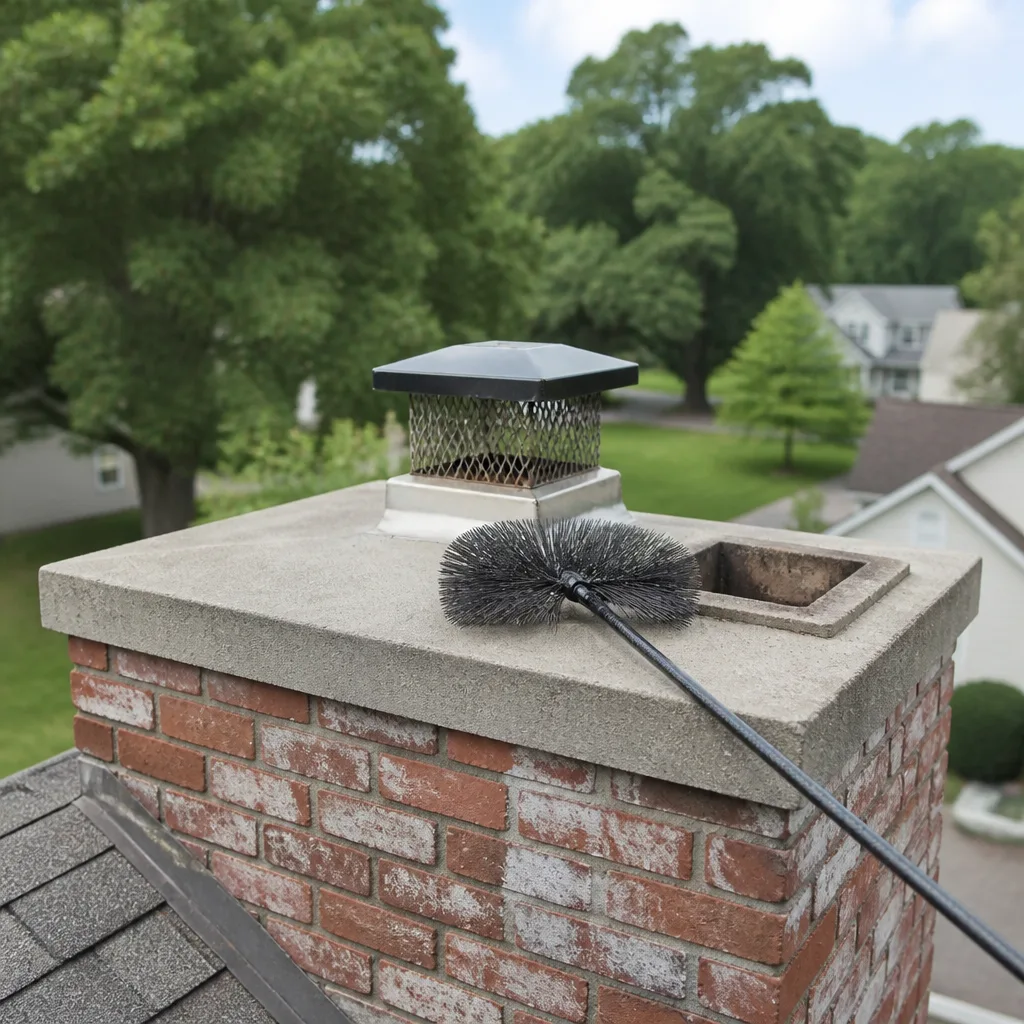 Sweep & inspection
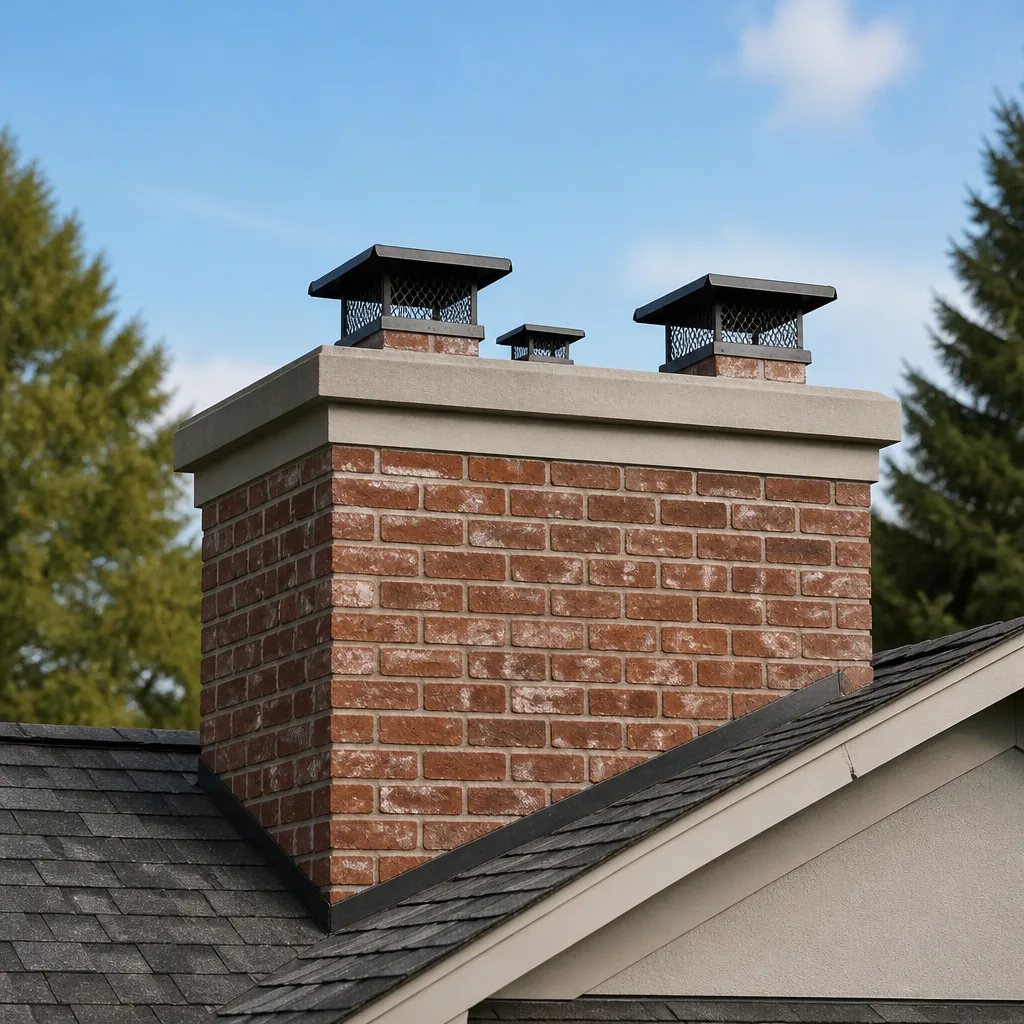 Caps & crowns
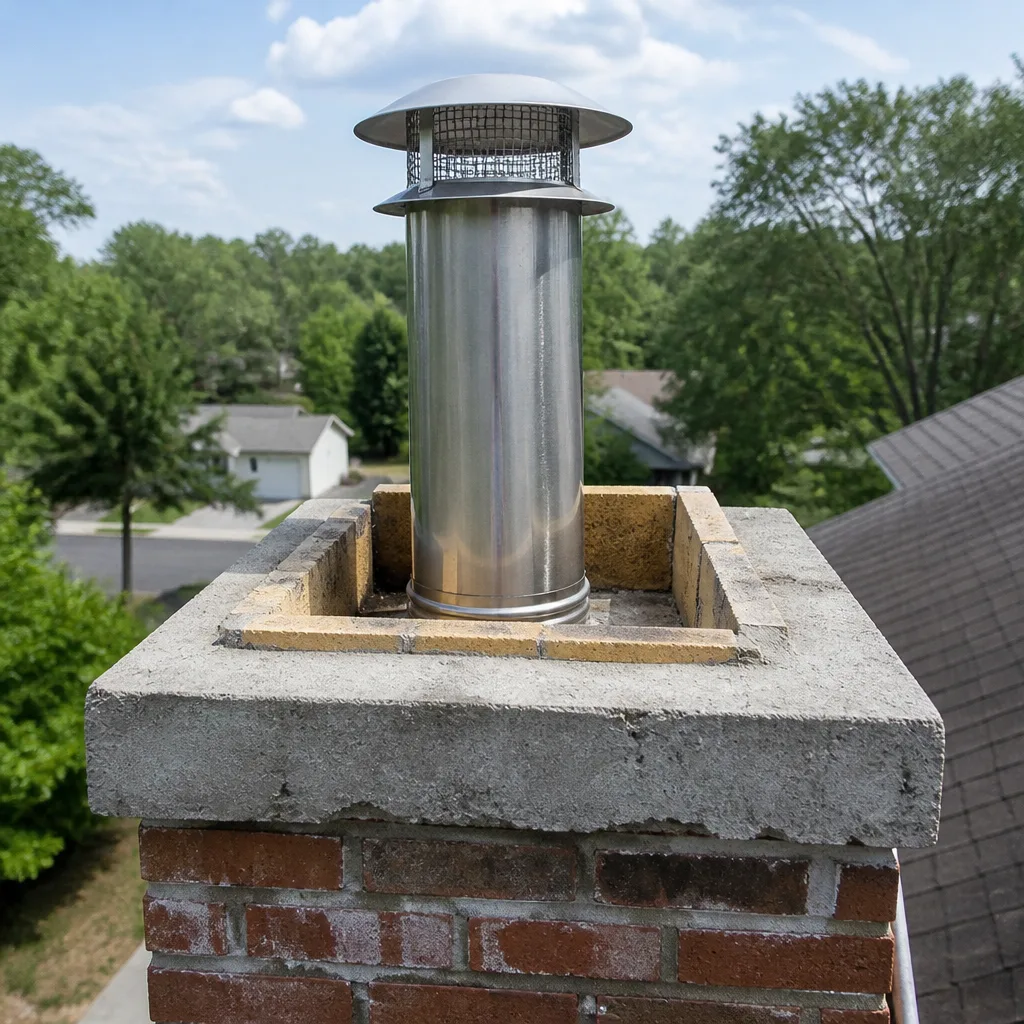 Flue relining
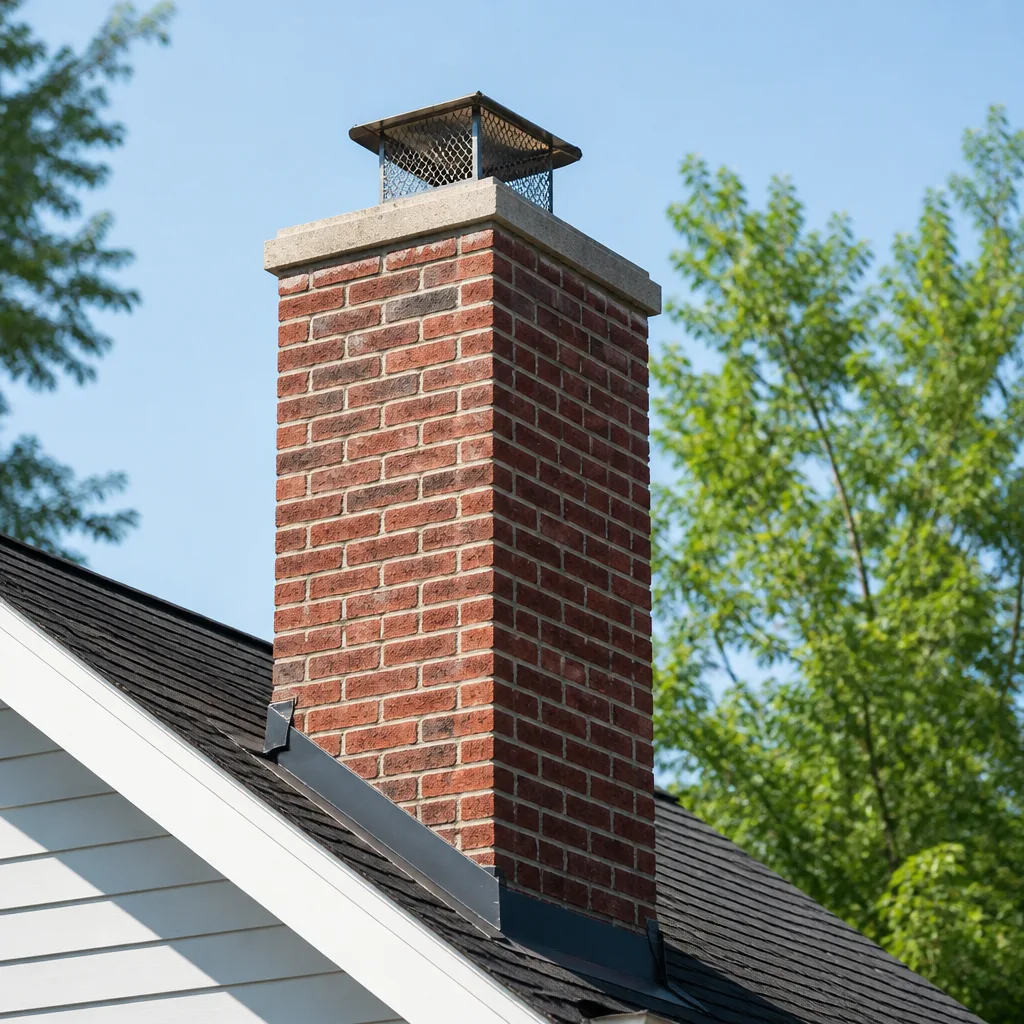 Masonry repair
 Gas fireplace service
Level 1 sweep and inspection to the NFPA 211 annual standard - flue, crown, cap, and flashing checked and photographed
Chimney sweep logs do not sweep chimneys. They loosen some creosote - which then falls where a brush and vacuum still have to collect it.
Chimney Sweep Maintenance Checklist for Lehigh Acres Homeowners
Most homeowners assume the first thing a technician finds on a first chimney inspection is creosote. In our experience across Lehigh Acres, the more common finding is a cracked or missing chimney cap, quietly funneling rainwater into the flue for years without anyone noticing. Water damage doesn’t announce itself the way a smoky fire does. It shows up much later, as a musty smell, a rusted damper, or a flue liner that’s crumbled from the inside out. This guide walks through what a trained technician actually looks for during a service call, translated into plain language, so you can run meaningful visual checks between professional visits. You’ll learn the monthly walkthrough, the pre-season checklist, post-storm items, and which tasks are safe to eyeball yourself versus which ones need a professional tool.
Quick Answer
A solid chimney maintenance checklist has two layers: monthly visual checks you can do from the firebox with a flashlight, and a professional sweep and inspection once a year, ideally in October or November before Lehigh Acres’ short burning season starts. Between visits, look for a capped or cracked chimney crown, rust on the damper, water stains, and any new smell coming from the flue. The rest requires a camera and the right tools, so call a technician for those. Skipping regular checks lets small problems like a loose cap or a hairline crown crack turn into liner damage that costs far more to fix.
Styles & brands we work with
- Sweep & inspection
- Caps & crowns
- Flue relining
- Masonry repair
- Gas fireplace service
Table of Contents
- The Monthly Visual Check You Can Do Safely
- The Lehigh Acres Pre-Season Checklist (October-November)
- Post-Storm Checks After Lee County Tropical Systems
- What the Smell of Your Chimney Tells You
- Camera vs. Flashlight: What You Can Verify Yourself
- Creosote Stages and Why They Matter Here
- Don’t Forget the Dryer Vent Checklist
- Common Mistakes to Avoid
The Monthly Visual Check You Can Do Safely
You don’t need a ladder, a camera, or tools to do a useful chimney check on your own every month. What you need is a flashlight and about five minutes. The goal is simple: catch changes early, before water, animals, or creosote have time to cause real damage. If you live in Lehigh Acres in a newer home or one of the older neighborhoods off Lee Boulevard, these monthly checks are the cheapest insurance you have on your chimney system.
Here’s what to look at, working from the firebox up to what you can see of the roofline from the ground:
- Firebox: Shine the light around the firebrick and mortar joints. Look for hairline cracks, crumbled mortar, or white chalky staining (a sign of moisture).
- Damper: Open and close it. It should move without scraping or sticking. Rust streaks or a stiff hinge mean moisture is getting in from above.
- Smoke chamber above the damper: Flashlight up. You’re looking for heavy black build-up, flaking, or any visible gap in the liner.
- Chimney cap (from the ground): Use binoculars or zoomed-in photos. The cap should sit flat and be intact. A missing or bent cap is the single most common exterior issue we find in Lehigh Acres.
- Crown and flashing: Again from the ground. Look for cracks in the concrete crown at the top of the chimney, and for gaps where the metal flashing meets the roof.
- Exterior stains: Dark streaks on the chimney’s outside usually mean water is running down the flue. White efflorescence means moisture has soaked into masonry.
Anything that changes between one month and the next deserves a note. Write it down. That running list makes your next professional sweep far more productive because the technician knows exactly where to look. If your monthly check turns up a cracked crown or a damaged cap, that’s usually a repair job rather than a cleaning job, and our page on chimney sweep service explains how we handle both in one visit.
The Lehigh Acres Pre-Season Checklist (October-November)
Lehigh Acres winters are mild, which means the burning season here is short but concentrated. Most homeowners light their first fire of the year somewhere between late November and mid-December, and then burn more often through January and February than they expected. That makes October and November the right window for a full professional sweep and inspection. Booking before the season starts means any repair found on the inspection can be scheduled and completed before you actually need the fireplace, rather than discovering the problem on the first cold night.
A proper pre-season sweep covers these steps. This is a professional service, not a homeowner task, but knowing the sequence tells you what you’re paying for:
- Clear and protect the firebox area so soot doesn’t end up in the living room. Drop cloths, sealed openings, careful vacuum work.
- Brush the flue from the top or the firebox depending on access, using the correct brush for the liner material. A metal flue and a clay-tile flue need different brushes.
- Remove creosote and animal debris – nests, twigs, and carcasses are surprisingly common in unused chimneys here.
- Run a camera inspection through the flue to confirm the liner is intact top to bottom. Cracks and gaps that don’t show up on a flashlight sweep often show up on camera.
- Check the damper, smoke shelf, and firebox for cracks, rust, and obstructions.
- Inspect the cap, crown, and flashing from the roof.
- Test the draft with a smoke test so you know the chimney will pull properly before you light a fire.
- Document everything in a report, with photos, so you know exactly what was found and what needs attention.
If your liner is compromised, we can resurface it with HeatShield, a professional chimney resurfacing system, or install a full stainless liner like a DuraFlex. Those are repair-grade options, not patches, and the choice depends on what the camera finds. This is the reason we carry those specific materials rather than generic substitutes.
Post-Storm Checks After Lee County Tropical Systems
Lee County sits in a region that gets hammered by tropical systems from June through November, and the wind and driving rain from those storms do things to a chimney that ordinary wear-and-tear doesn’t. Wind-driven rain hits the chimney from unusual angles, forcing water past caps and flashing that were perfectly fine in a light shower. Debris – palm fronds, twigs, roof gravel, insulation – gets pushed into the flue or wedged against the cap. Wind can bend the cap, lift flashing, and crack a crown that was already showing its age.
Within a day or two of a major storm passing through, do these checks from the ground:
- Look at the cap. Is it still sitting flat, or is it visibly bent, tilted, or missing?
- Look at the crown on top of the chimney. Are there new cracks visible, or pieces of concrete missing?
- Look at the flashing where the chimney meets the roof. Any obvious gaps or lifted metal?
- Walk inside and check the ceiling near the chimney and the fireplace for any new water stains.
- If the fireplace was in use before the storm, check the firebox for water pooling or damp ash.
What you should not do is climb on the roof to inspect or repair the cap or crown yourself, particularly right after a storm when the roof is slick. Height work on a wet roof is a real fall risk even on a single-story home. That’s a job for a trained technician with the right equipment. If you see damage from the ground but can’t be sure what’s going on, a professional check confirms it. The report you get back should show photographs of everything found, so nothing is being recommended that you can’t see for yourself.
What the Smell of Your Chimney Tells You
Chimneys talk. Not literally, but almost every problem has a smell signature, and learning to read it is one of the most useful homeowner skills in this whole guide. The smell is often the first clue that something is wrong, arriving weeks or months before you’d notice anything with a flashlight.
- Musty, damp, or earthy smell: Moisture intrusion. Almost always the cap or crown. In Lehigh Acres, where afternoon thunderstorms are common in the wet season, a missing cap lets water into the flue for months before you notice.
- Sharp, sulfur-like, or ammonia smell: Animal waste. Birds, squirrels, raccoons, and bats all take up residence in unused chimneys here. Small animals are more than a nuisance – their nests are flammable and their droppings can carry disease.
- Oily, smoky, or acrid smell: Stage 2 or Stage 3 creosote. This is the dangerous kind: glazed, hard, and highly flammable. It doesn’t brush off easily and needs professional removal.
- Smell of smoke inside the house when the fireplace isn’t lit: Could be a draft problem, a blocked flue, or a neighbor’s smoke coming down your chimney. Worth a professional look.
- Smell that only shows up when it rains: Almost certainly water getting in from above. The rain smell entering the house through the flue is the giveaway.
If you smell sulfur or a strong chemical odor, don’t burn a fire until someone checks it. If the smell is musty after rain, you likely have a cap or crown issue. We work with Gelco and Olympia Chimney caps and components specifically so that the repair uses parts designed for a chimney system, not an improvised fit. The key is to name the parts we install rather than use whatever is on a shelf.
Camera vs. Flashlight: What You Can Verify Yourself
One of the most useful distinctions in chimney maintenance is which checks you can trust yourself to do, and which ones need a professional tool. A flashlight from the firebox opening will show you the firebox, the damper, and a short way up the smoke chamber. It will not show you the full length of the flue, the top of the smoke chamber, or the inside of the liner above the first bend. That’s where a flue camera comes in.
Here’s the split, as we explain it to Lehigh Acres homeowners:
- Safe for a homeowner with a flashlight: Firebox condition, damper operation, smoke chamber immediately above the damper, visible creosote build-up at the firebox, exterior cap and crown from the ground (with binoculars), water stains inside, and the smell test above.
- Requires a professional flue camera: The full length of the flue liner, hidden cracks and gaps, offset liner joints, the connection between the firebox and the liner, and any obstruction further up than you can see.
This matters because a hairline crack in a clay tile liner is nearly invisible to a flashlight but perfectly clear on camera. Those cracks let heat, smoke, and carbon monoxide escape into the surrounding masonry or the house’s structure. That’s why professional sweeps include camera inspection – it isn’t a sales add-on, it’s the only way to actually verify the liner is intact.
If your sweep finds a compromised liner, HeatShield resurfacing is often the right repair for a liner that’s cracked but structurally sound. It’s a professional system that mills the flue interior and casts a new, smooth surface inside the existing chimney. For badly damaged liners or those that need to be replaced outright, a stainless system like DuraFlex is the more common solution. Both are repairable in the same visit that finds the problem.
Creosote Stages and Why They Matter Here
Creosote is the residue left behind by wood smoke, and it’s the main reason chimneys need sweeping. It builds up in three stages, each with its own risk. Understanding the stages helps you decide how often to schedule professional sweeps in Lehigh Acres, especially if you burn frequently through the season.
- Stage 1 creosote: Soot and light flaky deposits. Brushes off easily during a routine sweep. Not a fire risk if cleaned annually.
- Stage 2 creosote: Dark, hardened, and partly glazed deposits. Harder to brush off, more flammable, and a real fire risk if left in place too long. Typically forms in chimneys that burn regularly with poorly seasoned wood.
- Stage 3 creosote: Glazed, hard, oily-looking deposits. Highly flammable – this is what fuels most chimney fires. Cannot be swept off with a standard brush; needs professional removal, sometimes with chemical treatments.
Airing out the misconception: creosote isn’t only a cold-climate problem. Even in Lehigh Acres, where the burning season runs just a few months, a chimney that’s used heavily in January and February can build up Stage 2 creosote in a single season, especially with green or “seasoned-in-name-only” firewood. The fix is regular professional inspection and sweeping, along with burning dry, properly cured wood. If the sweep finds Stage 3 deposits, don’t use the fireplace again until they’re removed and the flue is inspected.
Don’t Forget the Dryer Vent Checklist
A chimney maintenance checklist isn’t complete without the dryer vent. The National Fire Protection Association links thousands of residential fires each year to clogged dryer vents, and the pattern is one most homeowners never see coming – lint accumulates inside the duct over months and years, slowly restricting airflow, raising the dryer’s operating temperature, and eventually creating an ignition source. Households that dry multiple loads a week build up lint fast. In Lehigh Acres, where many homes run the dryer year-round with the A/C on, it’s easy to forget the vent exists.
A homeowner visual check between professional cleanings:
- Disconnect the dryer from the wall and look inside the vent opening. A heavy felt-like lint layer is the sign of a problem.
- Check the exterior vent flap. It should open freely when the dryer runs and close when it stops. A stuck flap traps moisture and lint.
- Feel the outside of the dryer during a cycle. If it’s noticeably hotter than usual, airflow may be restricted.
- Watch drying times. If a load takes longer than it used to, that’s a clue.
- Listen for the outdoor vent. It should have a steady, strong airflow when the dryer is running.
What a homeowner can’t safely handle is a full vent cleaning, especially on a long run, a run with bends and elbows, or a vent hidden inside a wall. That requires professional equipment including a rotary brush and vacuum, and it’s a dedicated service we handle. If your dryer vents are due, our page on dryer vent cleaning explains what the service covers.
Common Mistakes to Avoid
- Skipping the annual sweep because the fireplace “looks fine.” A clean-looking firebox tells you almost nothing about the flue liner, the smoke chamber, or the cap. Most serious chimney problems start in places you can’t see without a camera.
- Assuming a masonry chimney only needs checking after years of use. Water damage happens quietly. A missing cap can start damaging a flue in a single rainy season in Lehigh Acres, and the homeowner never knows until the damage shows up inside.
- Climbing on the roof to check the cap yourself. This is the most common injury path for homeowners trying to save a service call. Wet roofs after a Florida thunderstorm are especially dangerous, and one slip is all it takes.
- Burning green or unseasoned firewood. It produces far more creosote per fire than dry, cured wood. If the wood hisses or feels heavy when you lift it, it’s not ready.
- Ignoring a smell that keeps coming back. Musty, sulfur, or oily smells are diagnostic. They aren’t normal, and they usually point at a specific problem that a technician can find quickly.
- Forgetting the dryer vent entirely. Chimney companies that only clean chimneys leave a big part of the home’s fire risk unaddressed. It’s worth choosing a company that treats dryer vent cleaning as a real service line, not an upsell.
- Letting an animal nest stay in an unused chimney. Birds, squirrels, and raccoons make nests that are both flammable and obstructive. If your chimney isn’t in use, a cap is the correct answer.
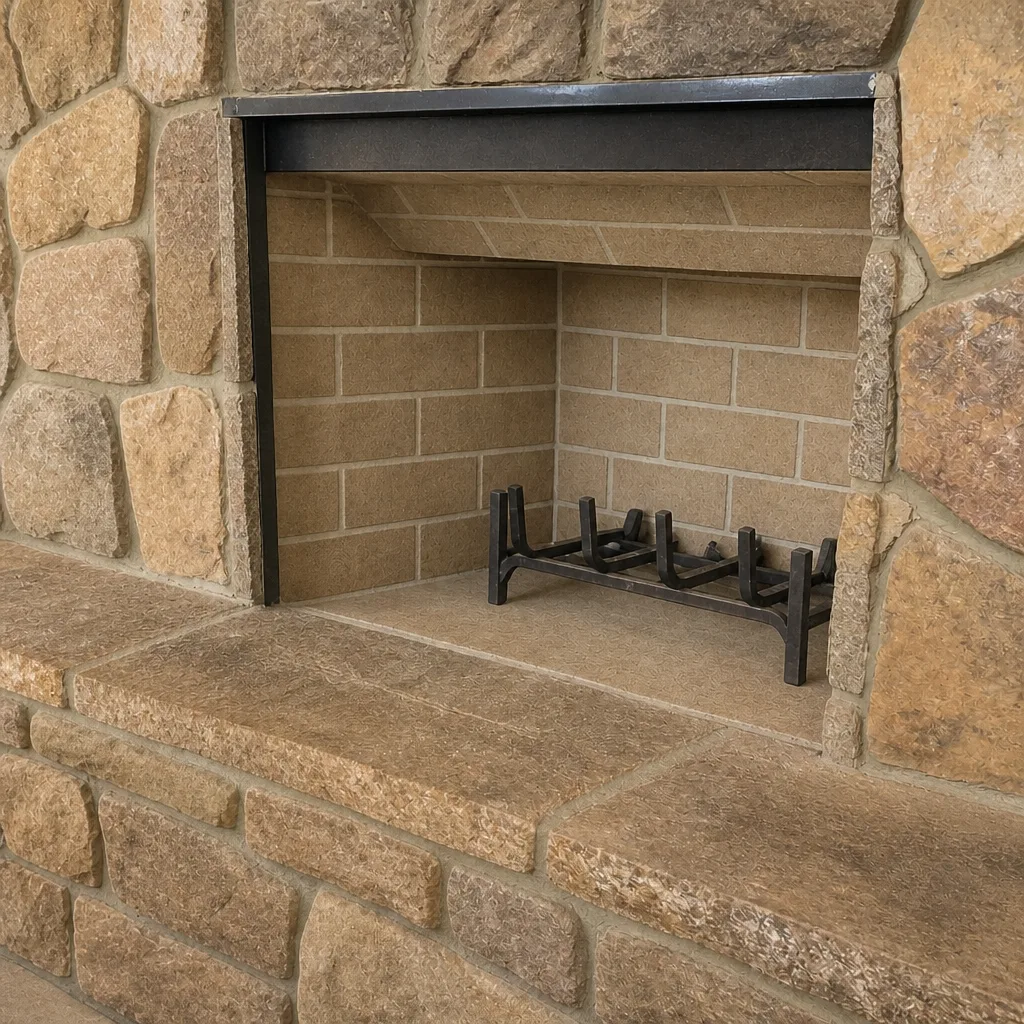
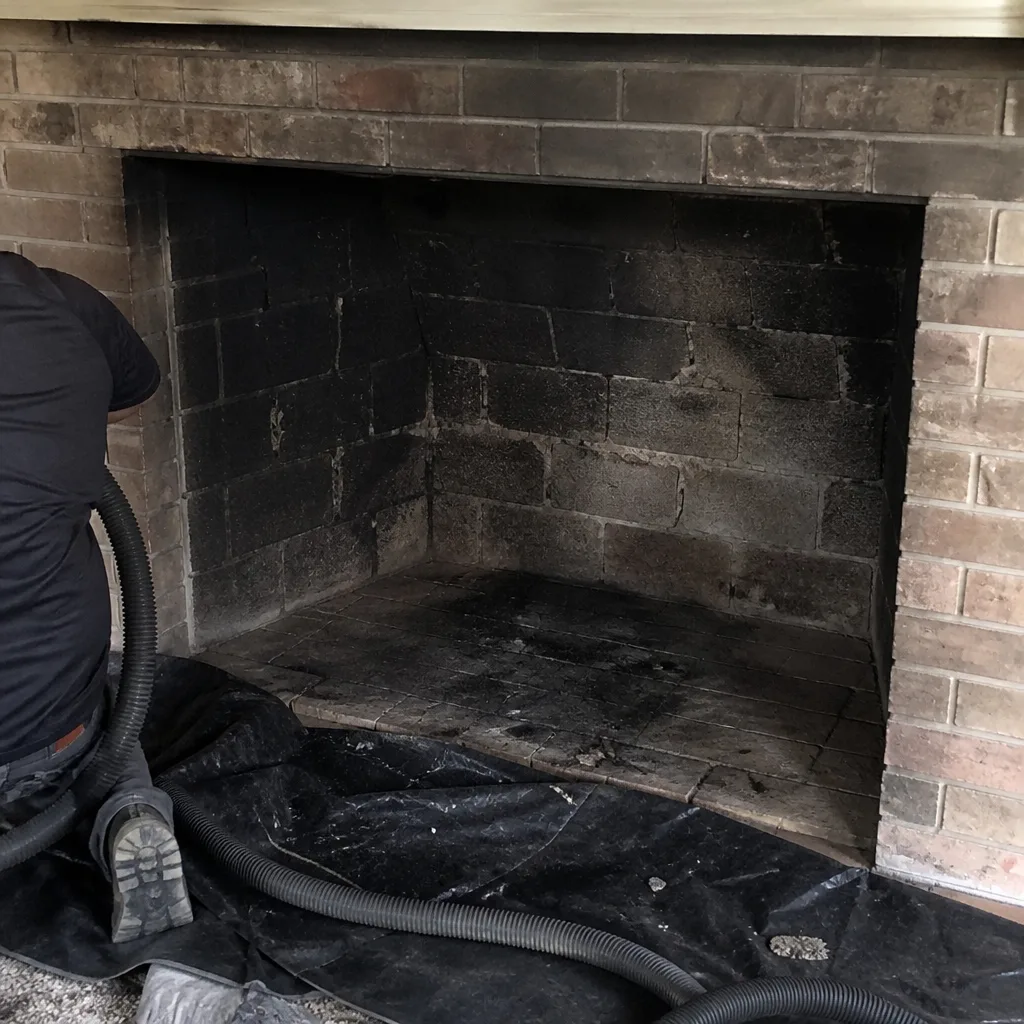
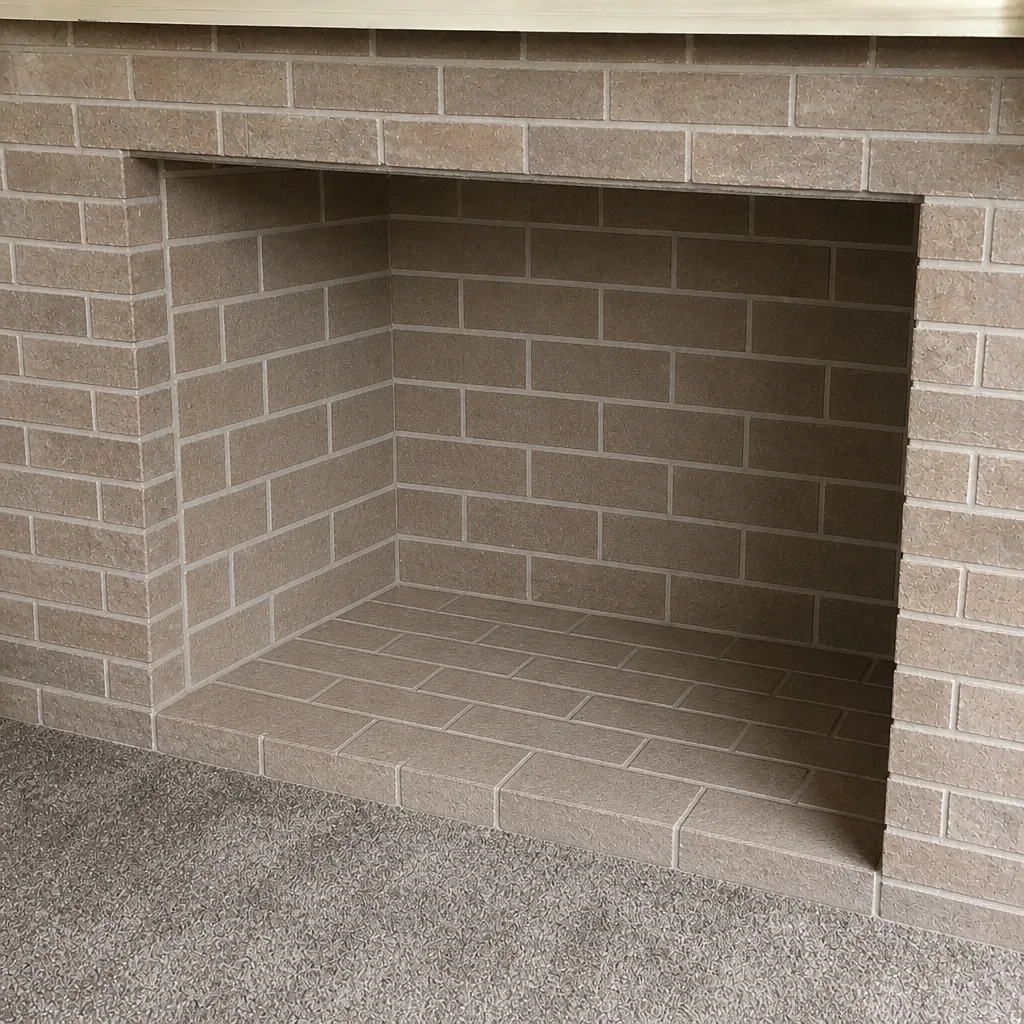
See the difference
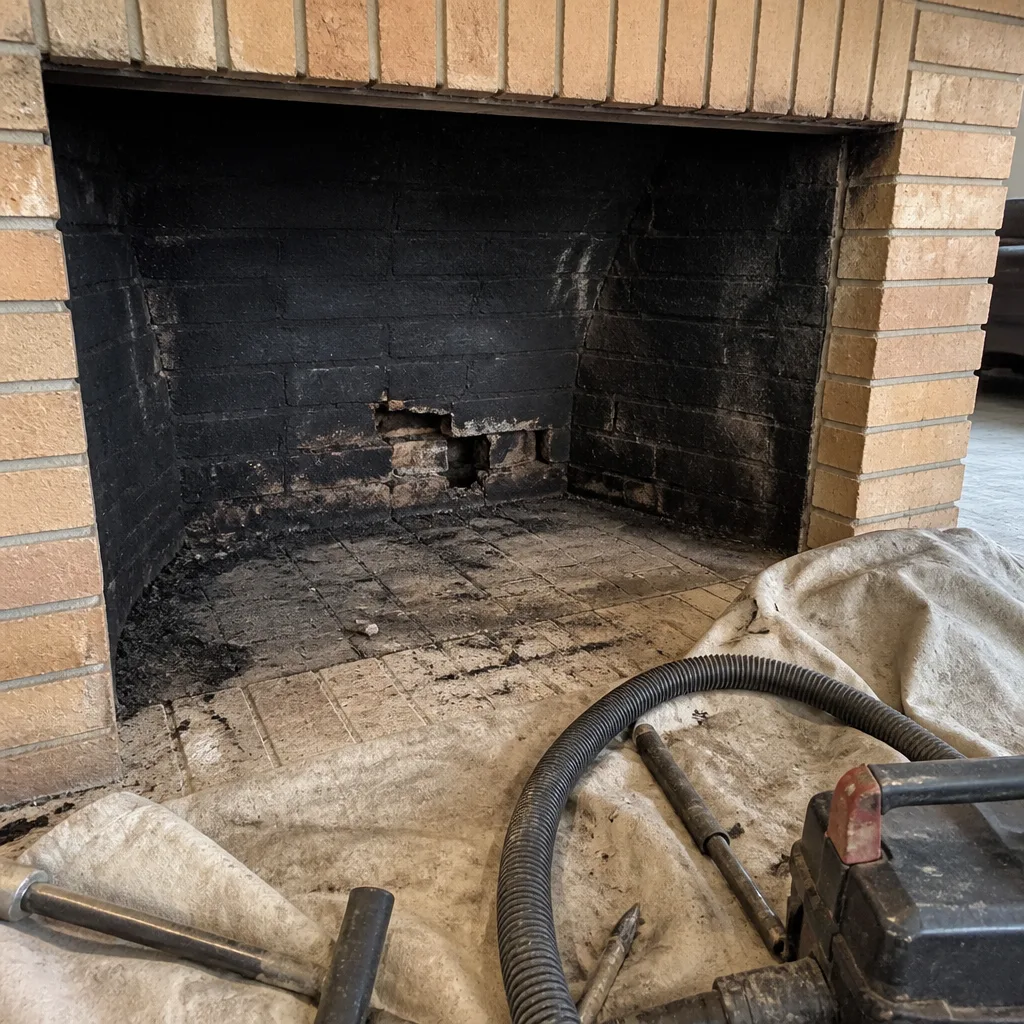 Before
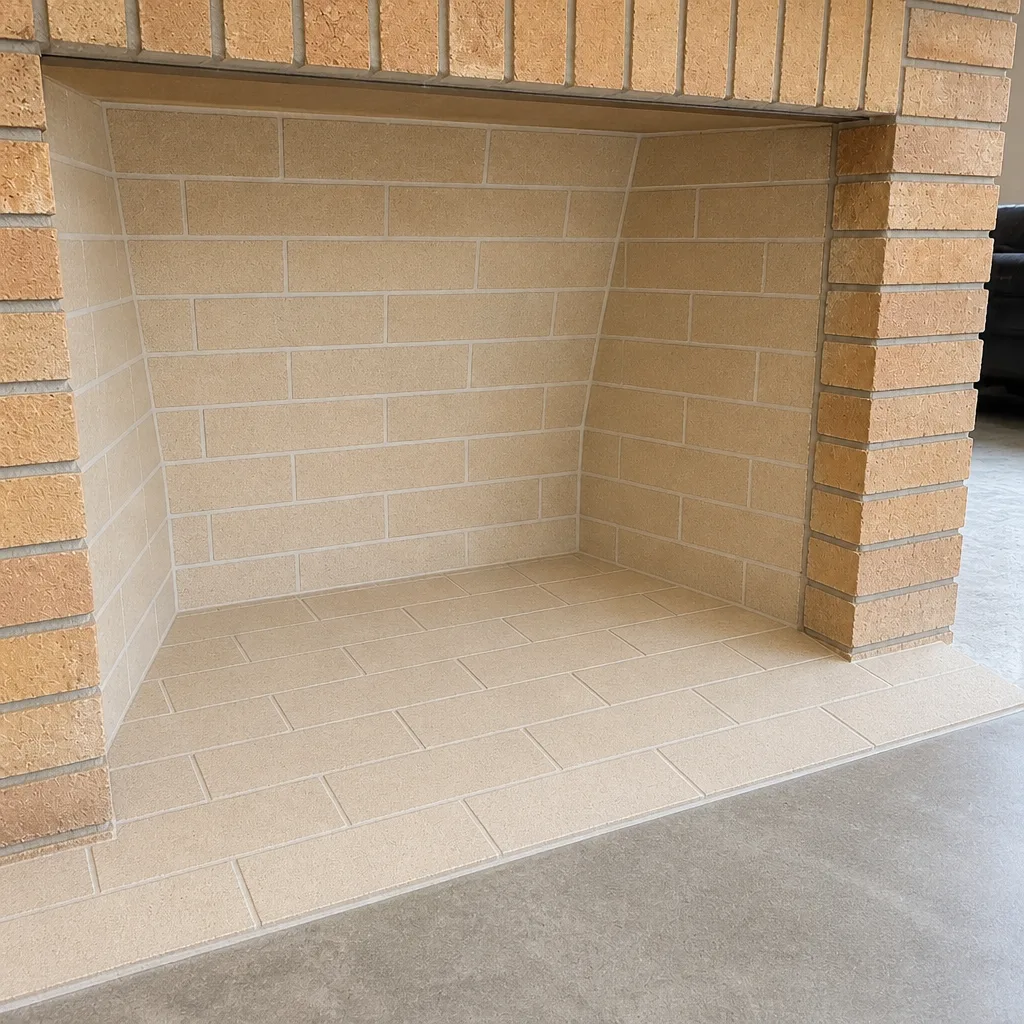 After
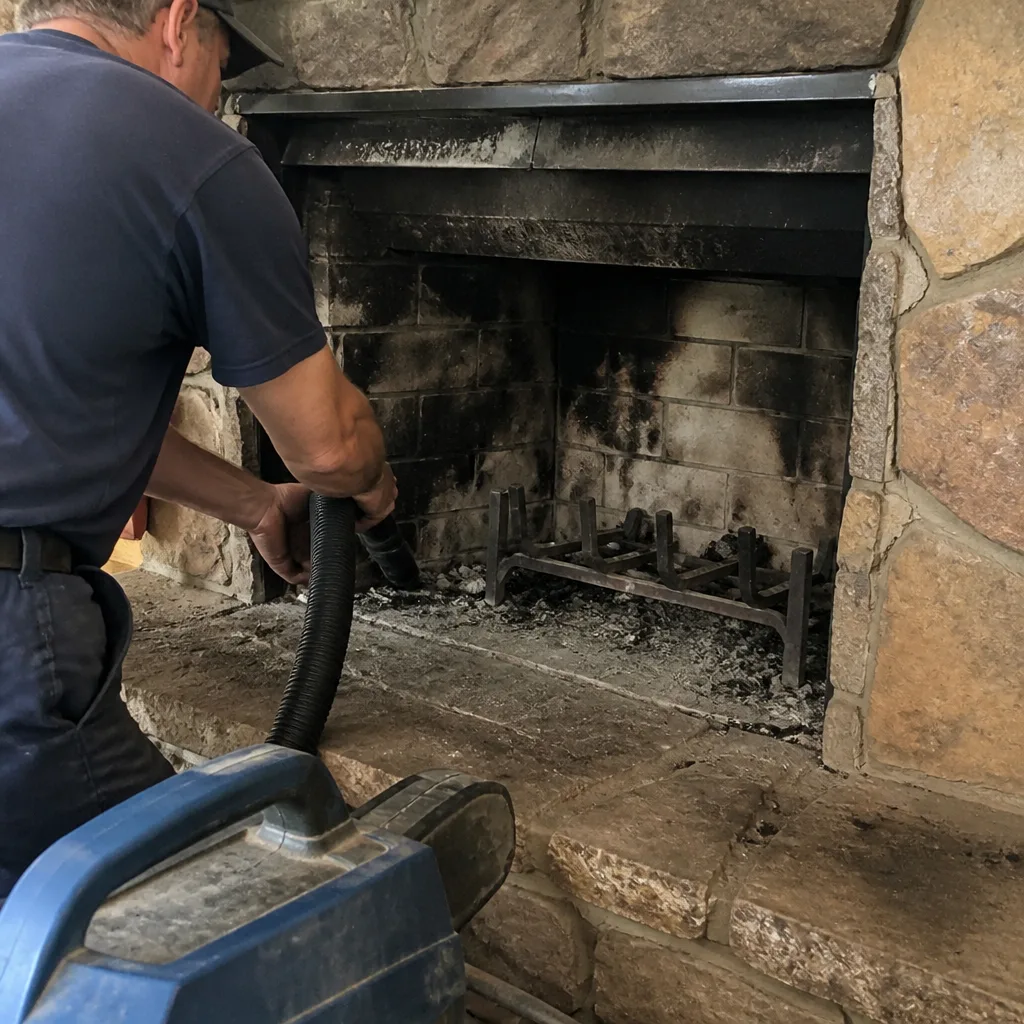 Before
 After
 Before
 After
When to Call a Professional
Some chimney work is DIY-appropriate visual checking. The rest isn’t. Call a professional if you find new cracks in the firebox or crown, if you smell sulfur or something oily in the flue, if your damper is stuck or rusty, if the chimney cap is missing or bent, if a storm has visibly damaged the flashing, if you’ve used the fireplace regularly for a season without a sweep, or if your dryer takes noticeably longer to dry clothes than it used to. Also call if you’re buying a home with a fireplace and don’t have an inspection report – a professional look before you close is worth the time.
Chimney Sweep Lehigh Acres offers free estimates in Lehigh Acres. Call (855) 473-9633 for an appointment. We answer 24/7, and we dispatch from 7am to 7pm, Sunday through Friday.
Frequently Asked Questions
Once a year for most homes, ideally in October or November before the burning season starts. If you burn frequently through the season or use the fireplace as a primary heat source, consider a mid-season check as well. The chimney sweep industry standard is annual inspection and cleaning for any chimney in active use.
Camera inspection is what actually verifies the liner is intact. A visual sweep with a flashlight can’t see past the first bend in the flue. Hairline cracks, liner gaps, and hidden obstructions only show up on camera, and those are the issues that let heat and carbon monoxide into the house. A proper sweep includes camera inspection as part of the service.
A cracked, bent, or missing chimney cap. It lets rainwater into the flue without any obvious sign inside the home until the damage has been building for months or years. In Lehigh Acres, where summer thunderstorms are common, a failed cap does damage fast. A properly fitted Gelco or Olympia Chimney cap is the usual repair.
Often, yes. HeatShield resurfacing can restore a liner that’s cracked or pitted but structurally sound, casting a new smooth surface inside the existing flue. For badly damaged or failing liners, a stainless replacement like a DuraFlex is the more reliable choice. The camera inspection tells us which is appropriate.
It’s the most efficient approach. Both venting systems are part of the same fire-safety picture, and handling them together means one visit, one appointment, one vendor. Dryer vent cleaning is a dedicated service, and bundling it with a chimney sweep is common for homeowners who want to cover both systems before the season starts.
Stop using the fireplace and schedule a professional inspection. Smoke smell with the fireplace off usually points to a draft problem, an obstruction in the flue, or a failing liner joint. None of those are things to ignore. Call (855) 473-9633 and we’ll schedule a look.
The Bottom Line
The value of a chimney maintenance checklist isn’t the list itself – it’s running it consistently. Monthly flashlight checks from the firebox. A full professional sweep and camera inspection every October or November, before the season starts. Post-storm walk-arounds after any tropical system passes through. Dryer vent attention on the same schedule, because the vent is part of the same fire-safety system. Add to that a habit of noticing smells and treating them as signals rather than quirks, and you’ll catch most chimney problems while they’re still small. The rest requires a technician with the right tools and a camera that shows you exactly what’s going on inside the flue before any work is recommended. That’s how fire safety gets taken seriously.
Ready to book a sweep or confirm what your chimney needs? Chimney Sweep Lehigh Acres covers Lehigh Acres and the surrounding area. Call (855) 473-9633 for a free estimate. We answer 24/7, and we dispatch from 7am to 7pm, Sunday through Friday. Our technicians have up to 8 years of experience, and every sweep and inspection comes with a photo report of what was found.
Written by the team at Chimney Sweep Lehigh Acres.