
Last updated November 15, 2026
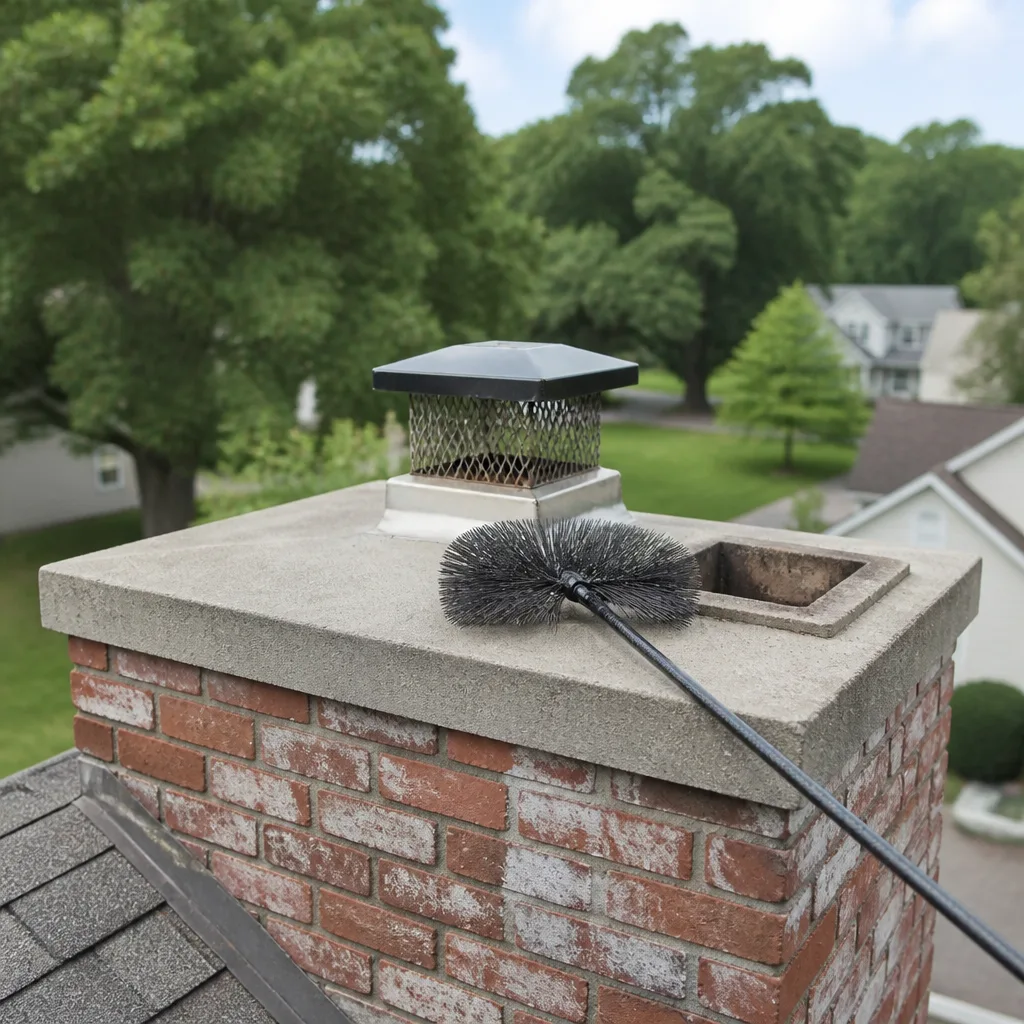 Sweep & inspection
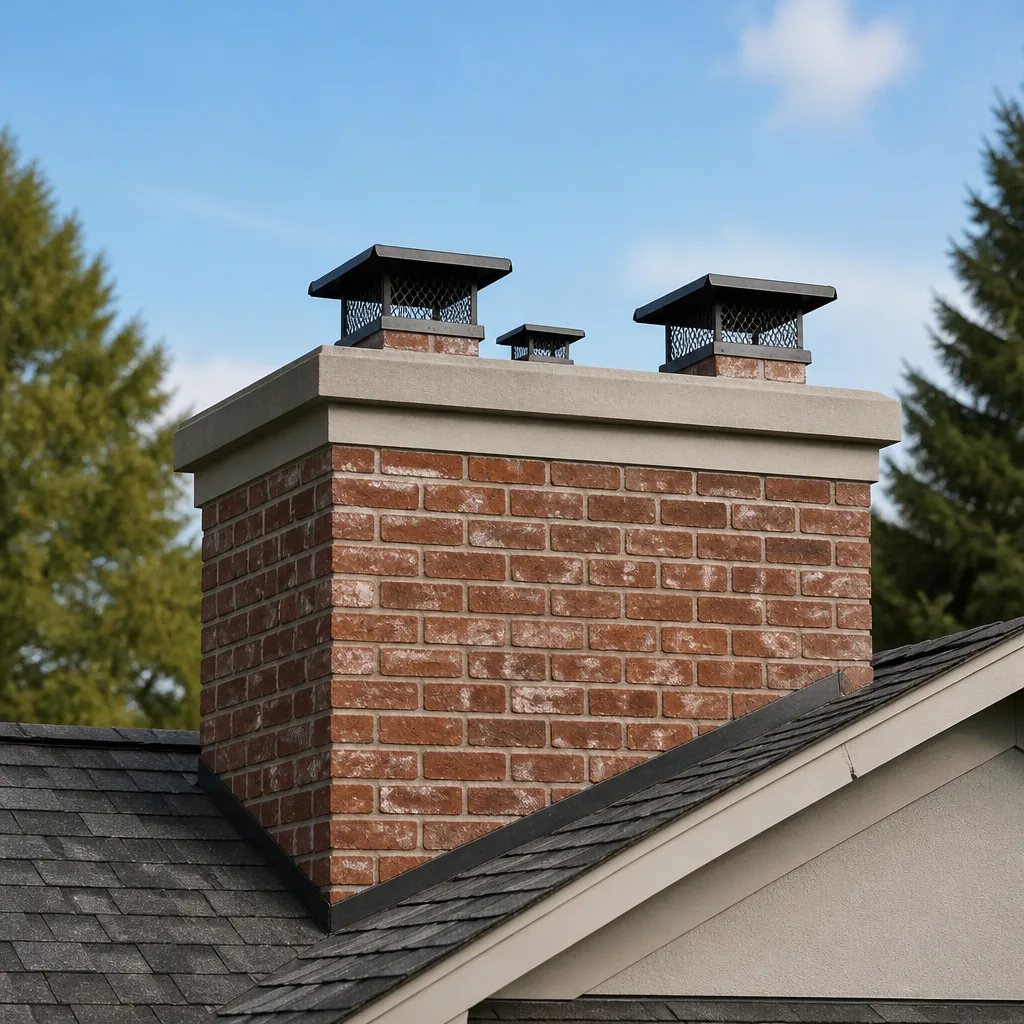 Caps & crowns
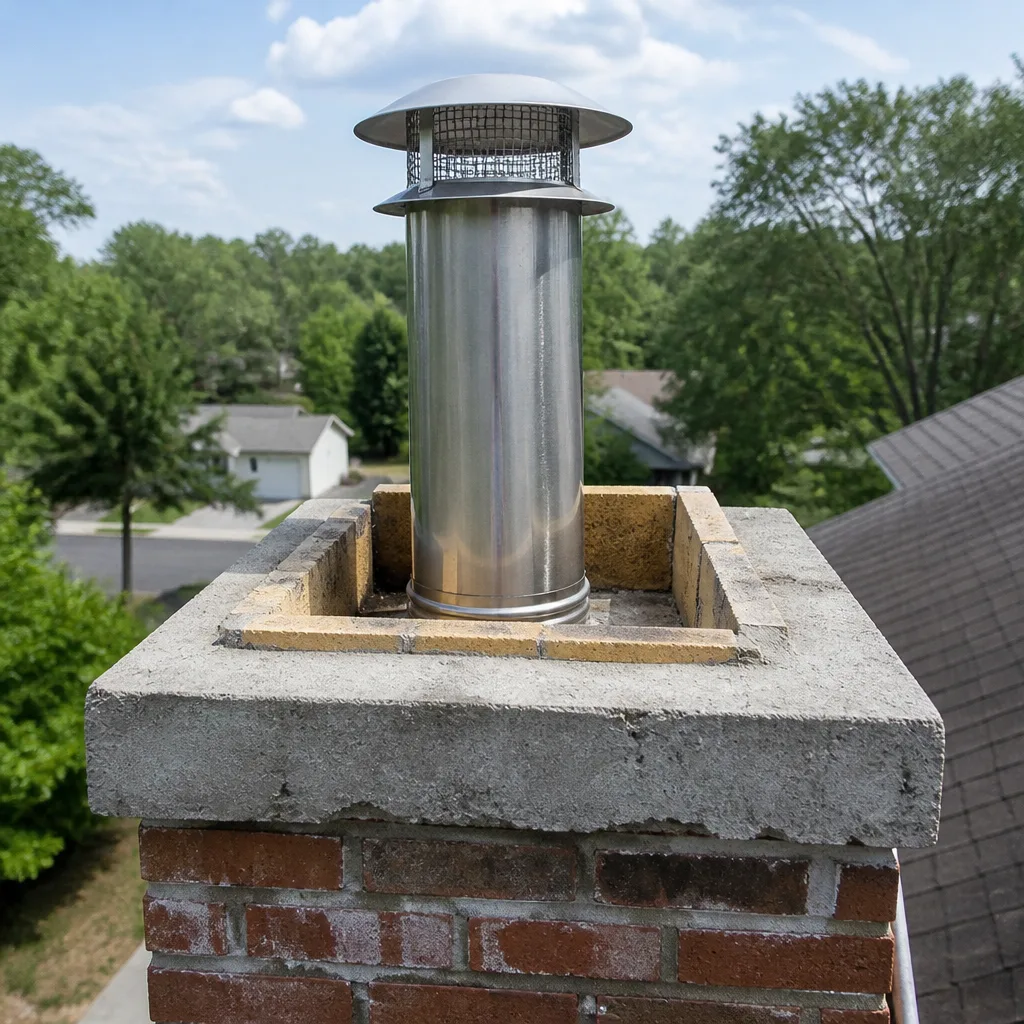 Flue relining
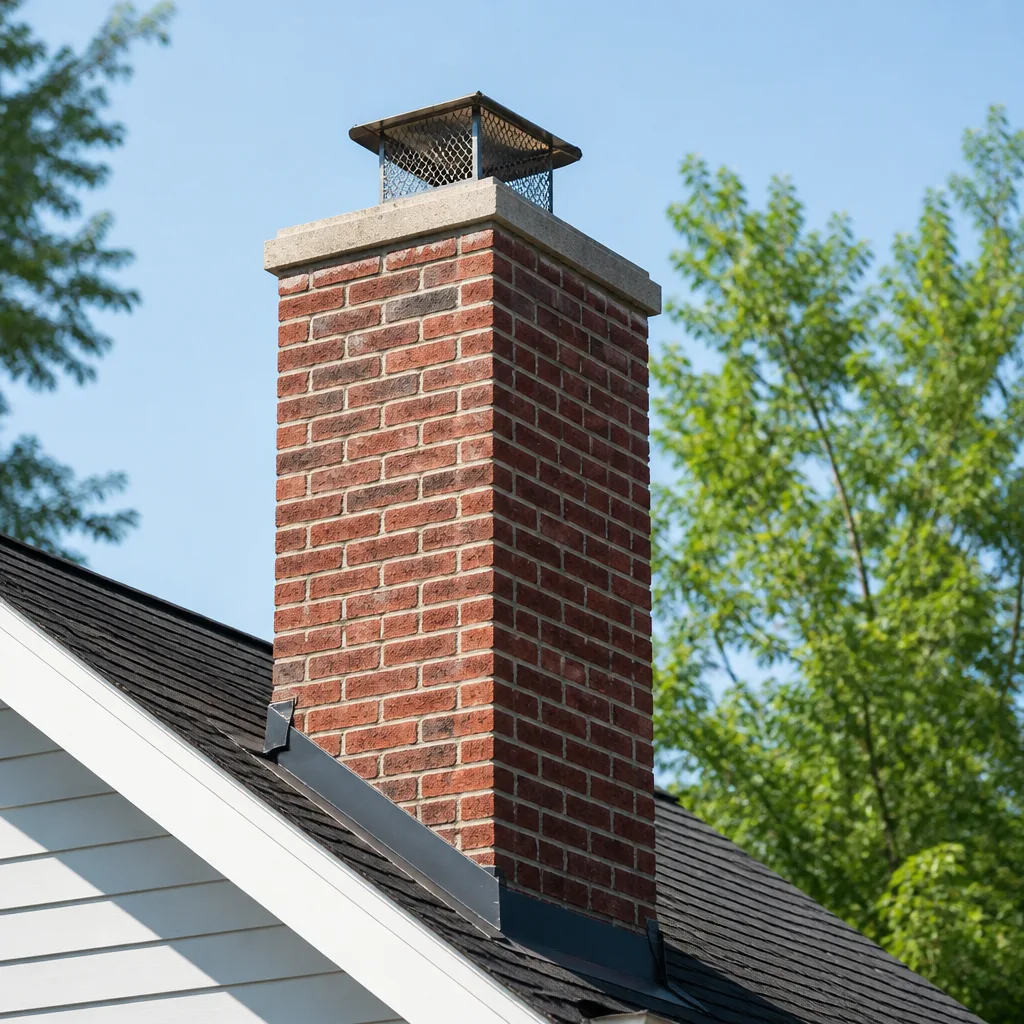 Masonry repair
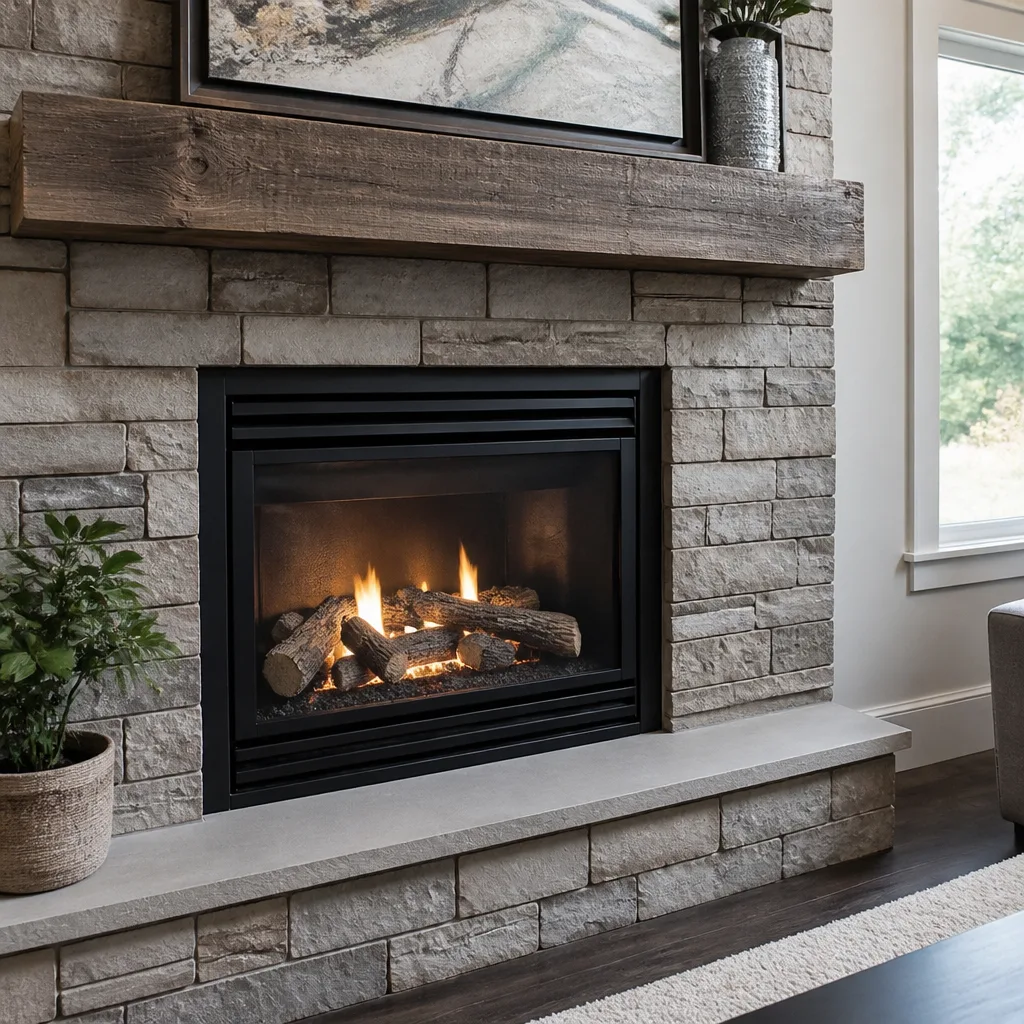 Gas fireplace service
Level 1 sweep and inspection to the NFPA 211 annual standard - flue, crown, cap, and flashing checked and photographed
Chimney sweep logs do not sweep chimneys. They loosen some creosote - which then falls where a brush and vacuum still have to collect it.
DIY vs Professional Chimney Cleaning: The Lehigh Acres Homeowner’s Decision Guide
A chimney you’ve brushed yourself can look completely clean and still hide a cracked tile liner, a collapsed flue section, or a slick of Stage 3 glazed creosote that reads as bare wall to your eye. None of those hazards announce themselves. They wait for a fire. That’s the uncomfortable truth behind the DIY-versus-professional question: brushing is the easy part, and it’s the part a homeowner can genuinely do. Inspection is the part that decides whether your home is safe, and inspection is where every DIY kit hits a wall it can’t climb. In this guide we’ll draw that line precisely, for Lehigh Acres homeowners who burn wood, run a gas insert, or just want to know what’s actually sitting in the flue before the next cool evening.
Quick Answer
You can physically clean the accessible walls of your own flue with a rod-and-brush kit, but you cannot inspect what you can’t see, and a DIY sweep gives you no view of liner integrity, the smoke chamber, cap condition, or firebox panel joints. For a light annual cleaning on a straightforward chimney, DIY is possible. For anything involving glazed creosote, unknown debris, a masonry flue older than a few seasons, or a first-time inspection, a professional sweep with a flue camera is the safer call. Most Lehigh Acres homes land in that second group.
Styles & brands we work with
- Sweep & inspection
- Caps & crowns
- Flue relining
- Masonry repair
- Gas fireplace service
Table of Contents
- What a DIY brush-and-rod kit actually cleans
- What a DIY sweep cannot assess
- The equipment that changes the safety equation
- Florida-specific risks DIY misses
- The one DIY task worth doing between visits
- How DIY creates a false sense of safety
- How to tell if a previous DIY cleaning left a hazard
- DIY versus professional: the practical comparison
What a DIY brush-and-rod kit actually cleans
A standard homeowner kit does one job well: it scrapes loose soot and light creosote off the straight, accessible section of flue wall. That’s a real service, and for a clean-burning fireplace used lightly, it’s not nothing. Here’s the honest mechanic’s view of what the kit reaches and what it doesn’t.
The brush cleans the flue walls it can contact – the main vertical run, from the damper up through the sections the rods can reach. It removes the powdery Stage 1 creosote and the soft, sticky Stage 2 layer if the brush is stiff enough and you work it long enough. What it leaves behind is the harder stuff and everything off-axis:
- Stage 3 glazed creosote – the hard, shiny, baked-on layer that a nylon or even a poly brush skips right over. It looks like a clean, dark wall. It’s fuel.
- Offsets and smoke chambers – the diagonal or stepped sections where the flue changes direction. Brushes follow a straight line; your flue may not.
- The smoke shelf and smoke chamber – behind and above the damper, a tight pocket that traps soot and won’t take a brush head.
- The cap and crown – no part of a rod-and-brush kit inspects the top of the chimney for a cracked cap, a missing screen, or rusted mesh.
- The firebox panel joints – the seams where the firebox walls meet. A brush never goes near them, and those joints are where cracks start.
In our experience across Lehigh Acres, the straight run is the least of a homeowner’s worries. The hazards live in the parts the brush can’t reach and the eye can’t see. That’s the entire argument for professional inspection, and it’s why a clean-looking flue tells you almost nothing.
What a DIY sweep cannot assess
A brush tells you the flue is brushed. It tells you nothing about whether the flue is intact. Those are different questions, and the second one is the one that matters. A homeowner with a flashlight can see the bottom of the flue and maybe a few feet up. A camera sees the whole run. Here’s the gap, item by item.
- Liner integrity. Clay tile liners crack, spall, and separate at the joints. A hairline crack in a tile is invisible from below but lets heat and embers reach framing. Only a camera or a proper visual inspection from the top and bottom reveals it.
- Cap and crown condition. A cracked crown lets water into the masonry, and a missing or damaged cap screen lets birds, squirrels, and rain straight in. You can’t check a cap from your living room.
- The smoke chamber. This is the tapered space above the damper and below the flue. It corbels inward, collects creosote, and is one of the most fire-prone areas in a chimney. It needs a mirror and a trained eye.
- Firebox panel joints. The seams between firebox panels open up over time. A gap there passes heat where it shouldn’t go. You have to know what you’re looking at to catch it.
- The full flue interior. A camera run shows offsets, gaps, obstructions, and the true thickness of creosote along the whole length – not just the section a brush touched.
This is the hard limit of DIY, and it’s not about skill. It’s about line of sight. You can own the best brush on the market and still have no idea what’s happening above the first few feet. When we sweep a Lehigh Acres chimney, the camera run is what turns a cleaning into an actual inspection – and it’s where most of the real findings come from.
The equipment that changes the safety equation
People assume the difference between a DIY sweep and a professional one is a bigger brush and a longer ladder. It isn’t. The difference is the diagnostic gear – the tools that let a technician see and treat what a homeowner can only guess at. Three pieces of equipment do most of that work.
The CCTV flue camera. A camera on a flexible rod runs the full length of the flue and shows the liner, joints, offsets, and creosote condition on a screen. This is the single most important tool in the trade, because it converts “it looks okay” into “here is what’s actually there.” A technician can show you the footage. That matters when someone tells you the liner needs work – you’re not taking it on faith.
A rotary cleaning system. For glazed Stage 3 creosote, a spinning rotary head with the right chain or blade set physically grinds the hard layer off the flue wall. A hand brush skips over it. Rotary cleaning is what actually removes the fuel load that a brush leaves behind, and it’s the reason some “cleaned” chimneys are still a fire risk.
Inspection mirrors and chamber tools. The smoke shelf and smoke chamber are tight, angled pockets. Mirrors let a technician see around the damper and into the chamber; specialized tools let them clean it without damaging the damper assembly. A brush on a rod can’t work those angles.
There’s also the material side. When a professional finds a compromised liner, the repair has to use products specified for chimney systems – that’s why we work with professional-grade brands like HeatShield for resurfacing and DuraFlex for liner systems, so a repair is a repair, not a generic patch. Repair-grade materials are part of the safety equation, not an upsell. You can read more about the full scope on our Chimney Sweep Lehigh Acres page, and the technicians who run the camera and the rotary head have up to 8 years of experience doing exactly this.
Florida-specific risks DIY misses
A chimney in southwest Florida sits idle through a long, warm off-season, and that idle time is when wildlife moves in. This is a climate fact, not a scare tactic. A flue that’s open at the top with a damaged or missing cap becomes a nest site for birds, squirrels, and the occasional raccoon. When a homeowner sticks a brush up into it without knowing what’s there, the results can be genuinely hazardous.
The first risk is mechanical. Displacing an unknown nest sends debris, dried nesting material, and whatever else is packed in there down into the firebox – and sometimes up into the smoke chamber where it’s harder to reach. What started as a light cleaning becomes a bigger mess with more material lodged in the wrong places.
The second risk is respiratory. Bird and bat droppings can carry histoplasmosis, a fungal infection that becomes airborne when dried droppings are disturbed. Sweeping a nest without proper respiratory protection, gloves, and containment exposes the homeowner to that risk directly. A professional sweep wears the right protection and handles the debris safely. This is one of the clearest cases where DIY isn’t just less thorough – it’s a health exposure you can’t see coming.
There’s a third angle specific to the way homes here get used. Fireplaces in Lehigh Acres often go months between burns, then get a heavy workout during the few cool weeks of the year. That pattern – long idle periods, then concentrated use – is exactly when an uninspected flue tends to reveal a problem. A pre-season professional inspection catches it before the first fire, not after.
The one DIY task worth doing between visits
We’re not going to tell you everything about your chimney requires a professional. It doesn’t. There’s real, useful maintenance a homeowner can do between professional visits, and doing it correctly actually extends the life of your fireplace and keeps your next sweep straightforward.
The legitimate DIY task is cleaning the glass fireplace doors and the firebox floor. Here’s how to do it without damaging anything:
- Let everything cool completely. No warm glass, no warm firebox. Give it hours, not minutes.
- Clean the glass with a fireplace-specific cleaner or a paste of baking soda and water. Avoid abrasive pads that scratch the glass, and avoid ammonia-based cleaners near gaskets.
- Keep liquid off the door gaskets. The rope gasket around the door seals the firebox. Soaking it degrades the seal and lets air in where it shouldn’t go. Wipe the glass, not the gasket.
- Don’t force the door or over-tighten the latch. If the door doesn’t close cleanly, that’s a gasket or alignment issue for a technician, not a homeowner fix.
- Sweep or vacuum the firebox floor of ash and debris once it’s fully cold, using a shop vac rated for fine ash, and leave a thin ash bed if your firebox calls for one.
That’s it. Glass, gasket caution, firebox floor. Notice what’s not on the list: the flue, the smoke chamber, the cap, the liner. Those stay in the professional column. If you want a full picture of what a proper sweep covers, our chimney sweep page walks through the checklist. And if your home has a clothes dryer, there’s a parallel fire-safety system worth the same attention – dryer vent cleaning addresses lint buildup that most chimney-only companies never look at, and the National Fire Protection Association links dryer vent issues to thousands of residential fires each year.
How DIY creates a false sense of safety
The most dangerous outcome of a DIY sweep isn’t a bad cleaning. It’s a good-enough cleaning that convinces you the chimney is fine. A brushed flue looks clean from the damper. The soot is gone from the reachable walls. The fire draws. Everything signals “done.” And that’s precisely the moment a homeowner stops thinking about the liner crack, the glazed creosote above the brush’s reach, or the cap that lost its screen two seasons ago.
This is what we mean by a false sense of safety. The cleaning removed the visible evidence of a problem without addressing the problem. A cracked tile liner doesn’t care that the flue walls are clean – it still passes heat to framing. Stage 3 glazed creosote doesn’t care either; it’s still fuel sitting on the wall, and a hot fire can ignite it regardless of how tidy the rest of the flue looks.
The pattern is predictable. A homeowner sweeps annually, feels responsible, skips professional inspection because “I keep it clean.” Years pass. The chimney has never actually been inspected. When a professional finally runs a camera, the findings are often the accumulation of seasons of unrepaired wear – not because the homeowner was careless, but because the DIY routine answered the wrong question. It answered “is it brushed?” when the real question was “is it safe?”
That’s not a knock on homeowners who sweep their own chimneys. It’s an honest statement of what brushing can and can’t tell you. If you’ve been maintaining your own flue, the useful next step isn’t to stop – it’s to get a real inspection on the record so you know what you’re actually dealing with.
How to tell if a previous DIY cleaning left a hazard
If you’ve cleaned your own chimney for years and are now booking a first professional inspection, you’re in a common and reasonable position. Plenty of Lehigh Acres homeowners start with DIY and later want a professional baseline. The key is to tell the technician what they’re walking into, so the inspection covers what a DIY routine might have missed. Here’s what to say when you schedule.
- Tell them it’s a first-time professional inspection after years of self-maintenance. That single sentence changes the scope – the technician knows to inspect rather than just sweep.
- Describe how you cleaned it. Rod and brush? From the top or bottom? Did you reach the smoke chamber or just the main flue? What you could and couldn’t reach tells them where to look.
- Mention any debris or wildlife you’ve found. Nests, feathers, droppings, or unusual material in the firebox is a signal to inspect the cap and flue with extra care.
- Flag any changes you’ve noticed. A fire that draws differently, smoke rolling into the room, a smell between burns, or visible cracks in the firebox – all of it helps.
- Ask for the camera footage. A professional inspection should show you what was found, not just tell you. Seeing the liner condition yourself is the whole point.
When we come out on a first-time inspection after DIY maintenance, we run the camera the full length of the flue, check the cap and crown from the top, inspect the smoke chamber with mirrors, and look at the firebox joints. Then we show you what we found and explain what can safely wait. Nothing gets recommended without evidence you can see. If the flue is in good shape after years of DIY, we’ll tell you that too – and you’ll know it’s true because you’ll have watched the camera.
DIY versus professional: the practical comparison
The cost question is fair, and it deserves an honest answer rather than a sales pitch. A DIY kit costs what it costs once and can be reused, which makes it look cheaper on paper. The professional sweep costs more per visit but includes the inspection, the camera, and the diagnostic judgment that tells you whether your chimney is safe. Here’s how the two actually compare on the things that matter.
- Cleaning reach: DIY handles the accessible straight flue wall. Professional sweeping clears the full flue, the smoke chamber, and the smoke shelf, and uses rotary equipment for glazed creosote.
- Inspection: DIY gives you a flashlight view of the bottom few feet. A professional provides a camera run of the entire flue, a top-down cap and crown check, and a smoke chamber inspection.
- Hazard detection: DIY can’t see liner cracks, gasket gaps, or firebox joint separation. A professional inspection is built to find exactly those.
- Wildlife and debris: DIY risks disturbing an unknown nest without protection. Professional sweeps handle debris with proper containment and respiratory protection.
- Repair path: If a DIY sweep turns up a problem, you still need a professional to fix it. A professional sweep can address structural findings without a second company, using repair-grade products like HeatShield and DuraFlex.
- What you walk away with: DIY leaves you with a brushed flue and an assumption. A professional sweep leaves you with footage, a written picture of the chimney’s condition, and a clear answer on what’s safe and what isn’t.
Our pricing is set per job by a free written estimate, so there’s no guesswork about what a sweep or an inspection will cost before you book. What we won’t do is recommend liner or masonry work without showing you the camera evidence first. If your chimney can safely wait another season, we’ll say so.
Common Mistakes to Avoid
- Treating a brushed flue as a safe flue. Cleaning removes soot but does nothing to assess the liner, cap, or firebox joints. A clean chimney can still fail an inspection.
- Brushing into an unknown nest. In Florida’s long off-season, wildlife moves into open flues. Sweeping a nest without respiratory protection and containment exposes you to histoplasmosis and sends debris where you can’t reach it.
- Ignoring glazed creosote because it looks clean. Stage 3 creosote is hard and shiny and reads as a clean wall. A hand brush skips it; it takes rotary cleaning to remove it, and it’s fuel until it’s gone.
- Soaking the door gasket while cleaning glass. A wet rope gasket degrades and loses its seal. Clean the glass, keep liquid off the gasket, and let a technician handle any door-seal issue.
- Skipping the cap and crown. A cracked crown or missing cap screen lets water, birds, and squirrels in. It’s invisible from the living room and one of the most common things DIY maintenance misses.
- Never getting a professional inspection after years of self-maintenance. If your chimney has never been on camera, you don’t actually know its condition. Book a first-time inspection and watch the footage.
- Forgetting the dryer vent. If you’re thinking about chimney fire safety, the clothes dryer vent is the same category of hazard and gets overlooked. The NFPA ties dryer vent issues to thousands of home fires a year; it deserves the same attention as the flue.
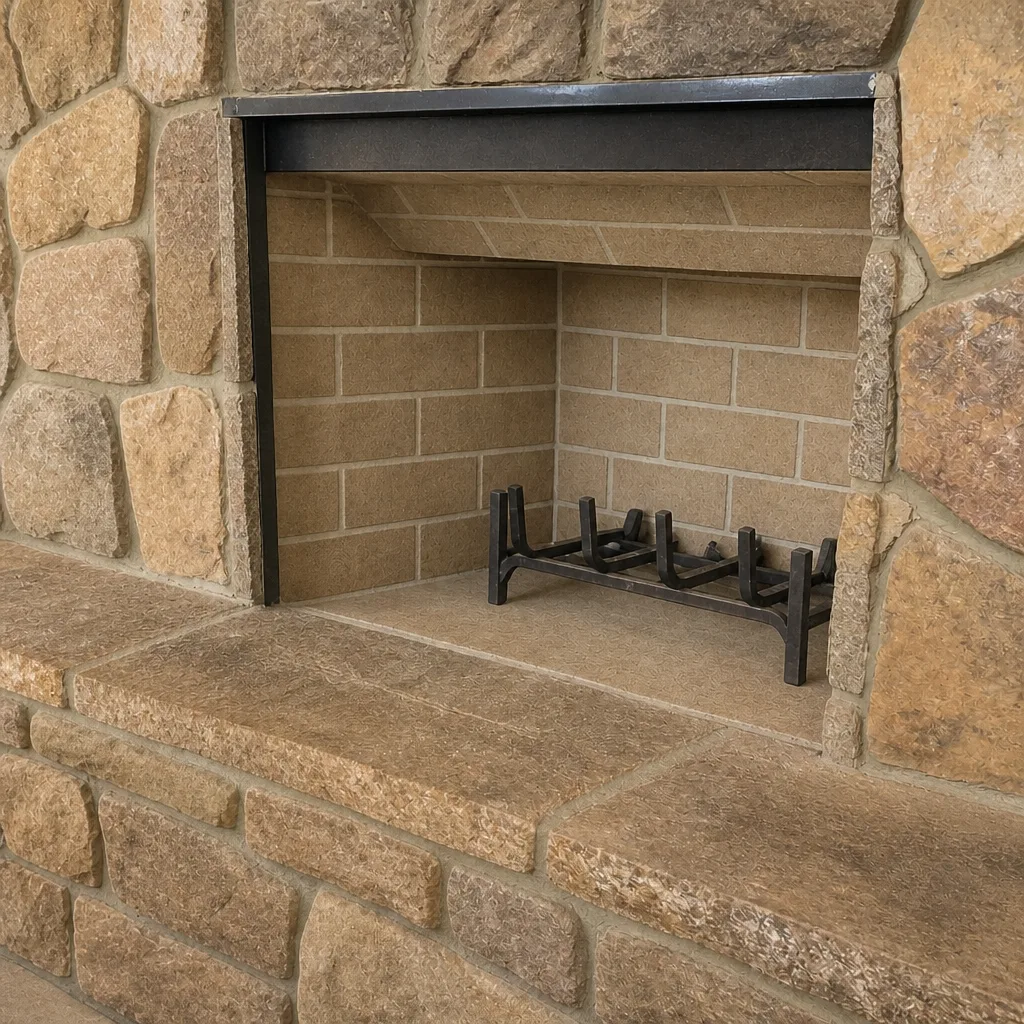
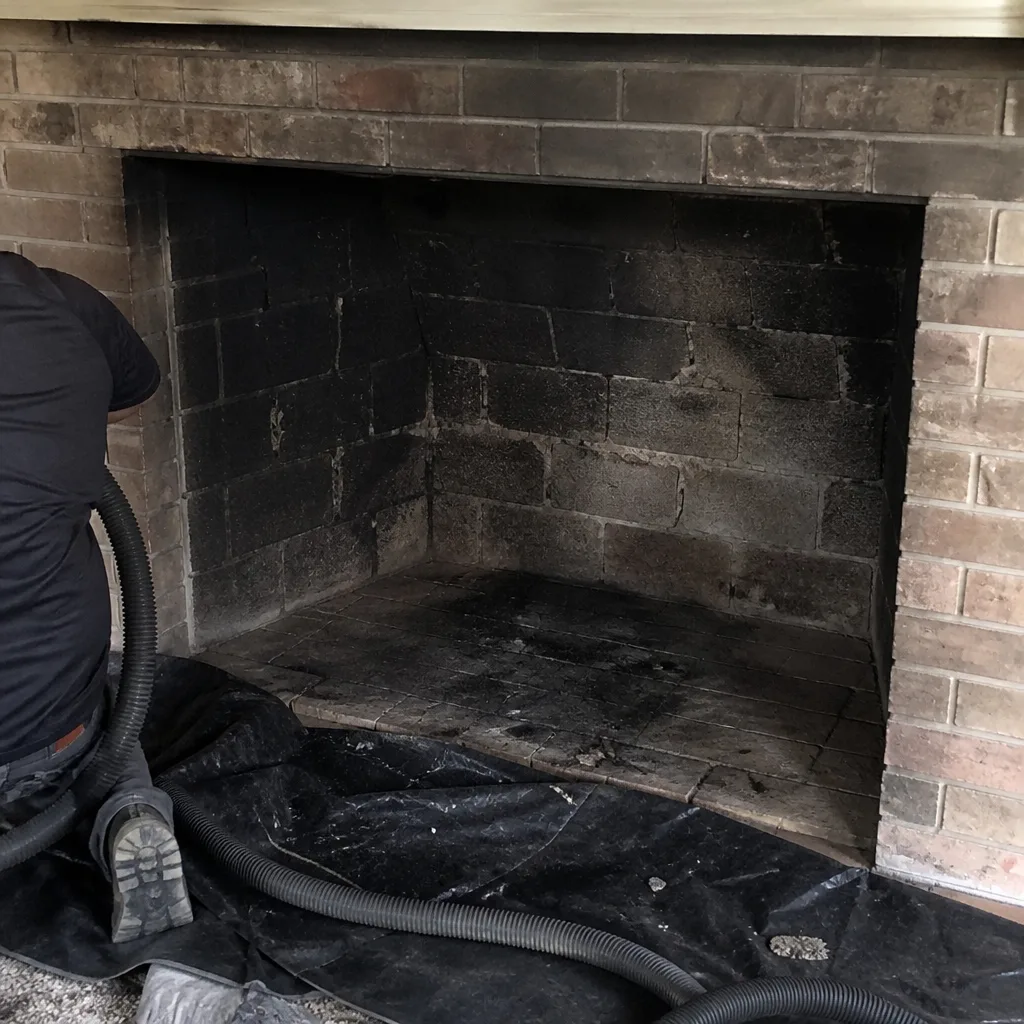
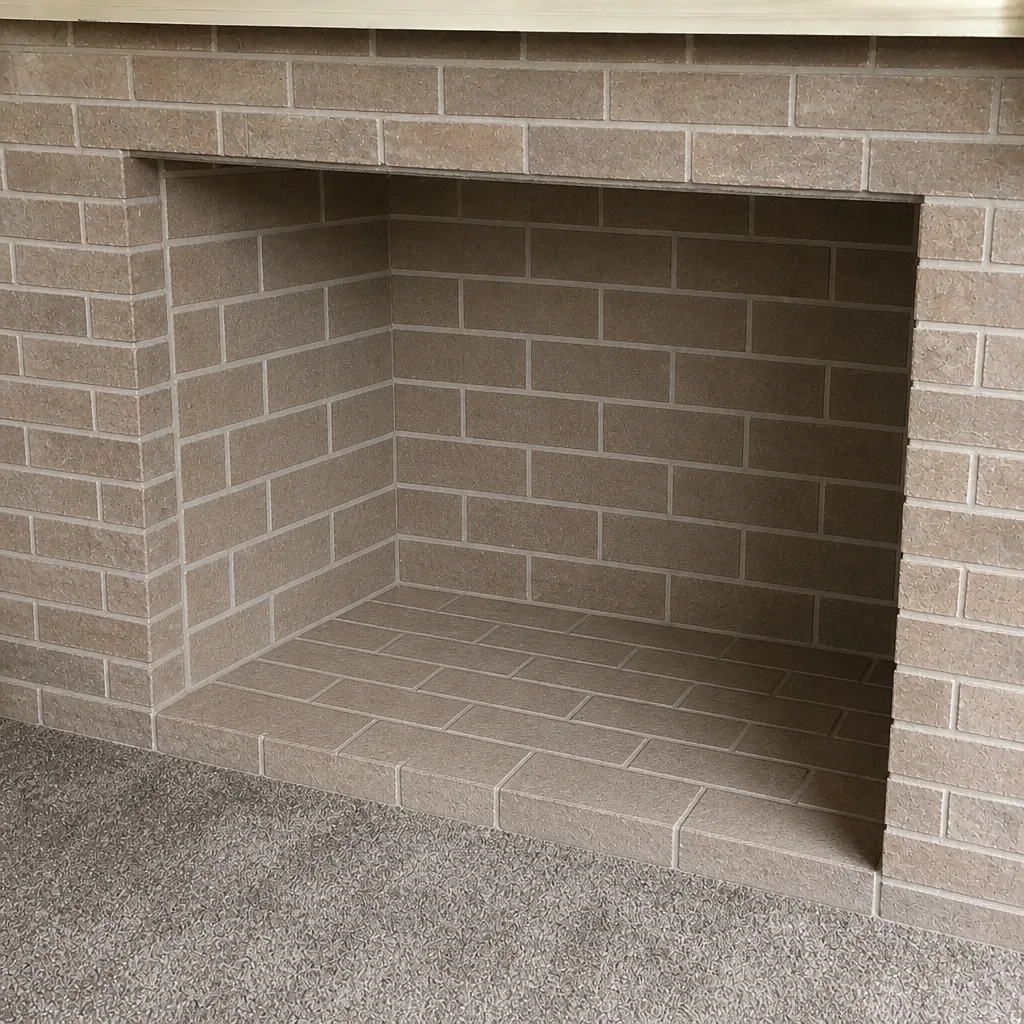
See the difference
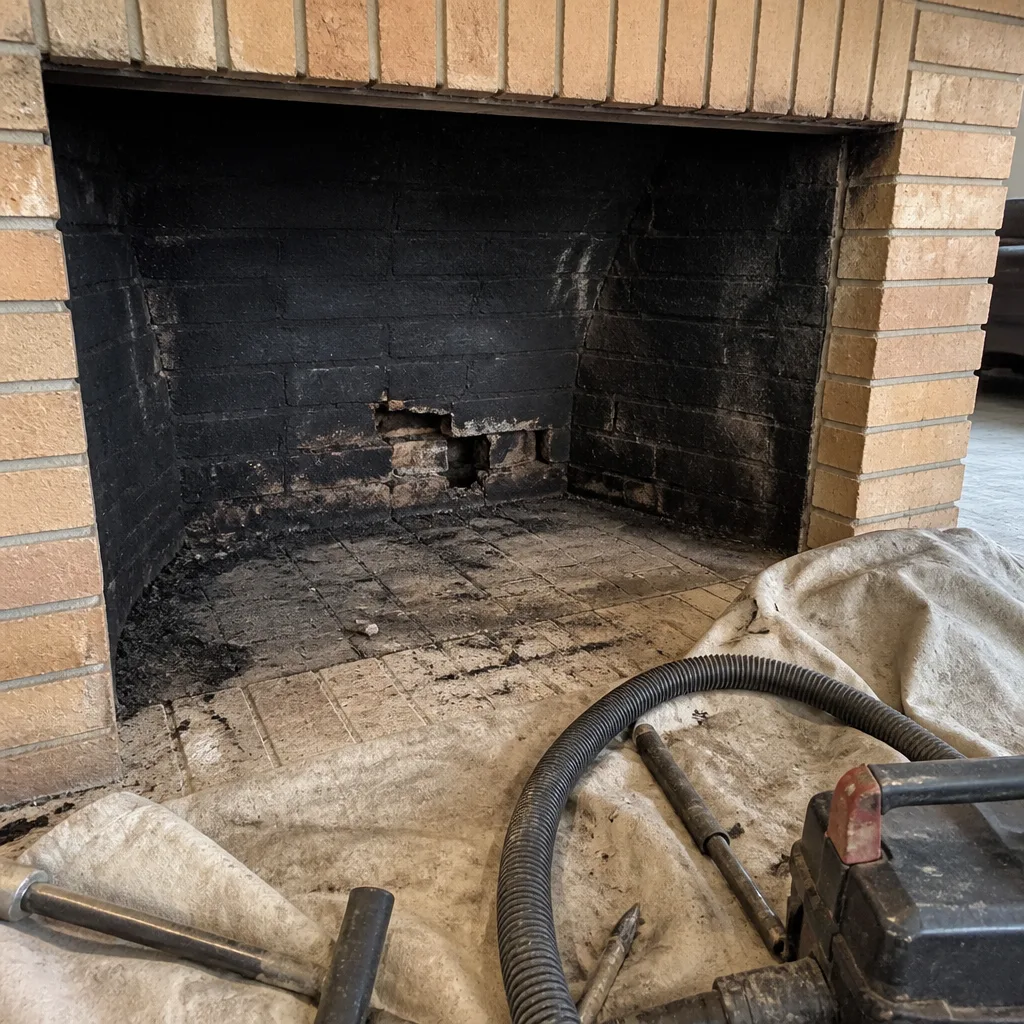 Before
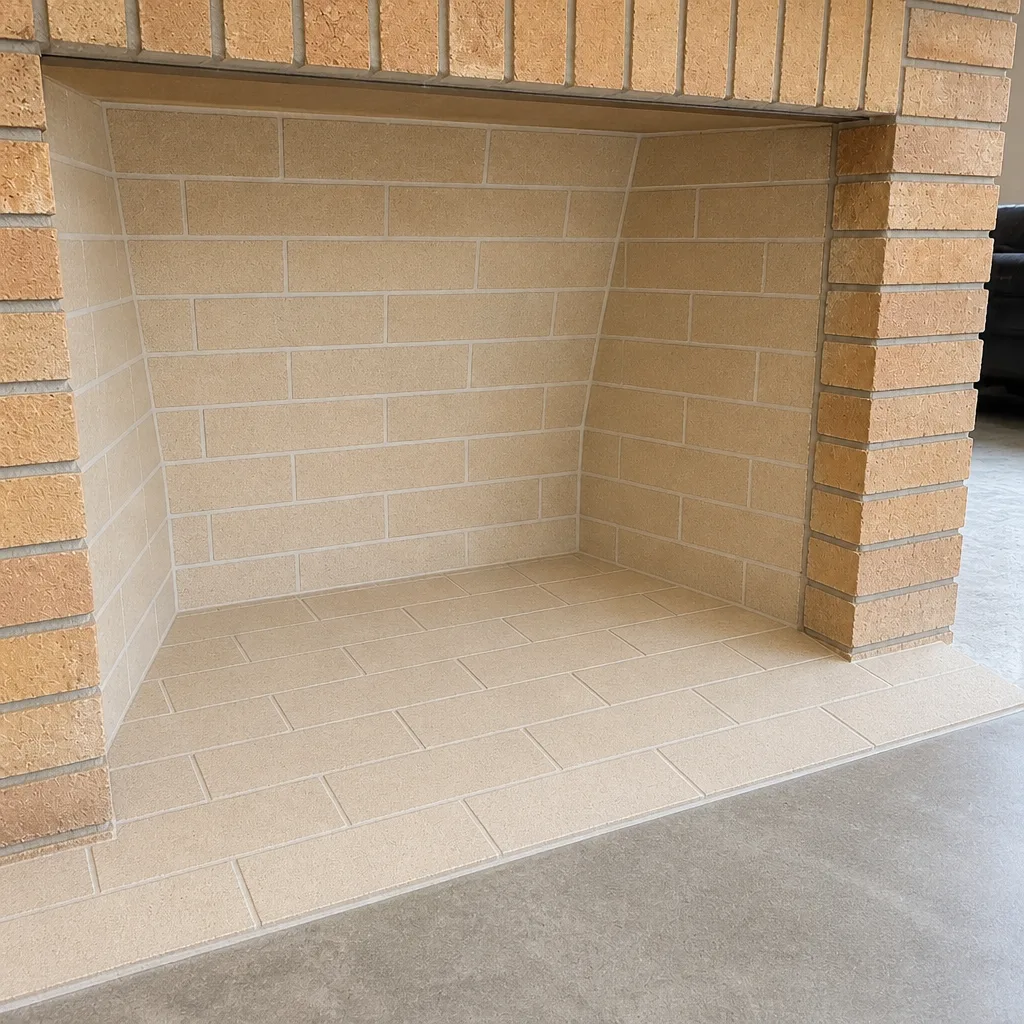 After
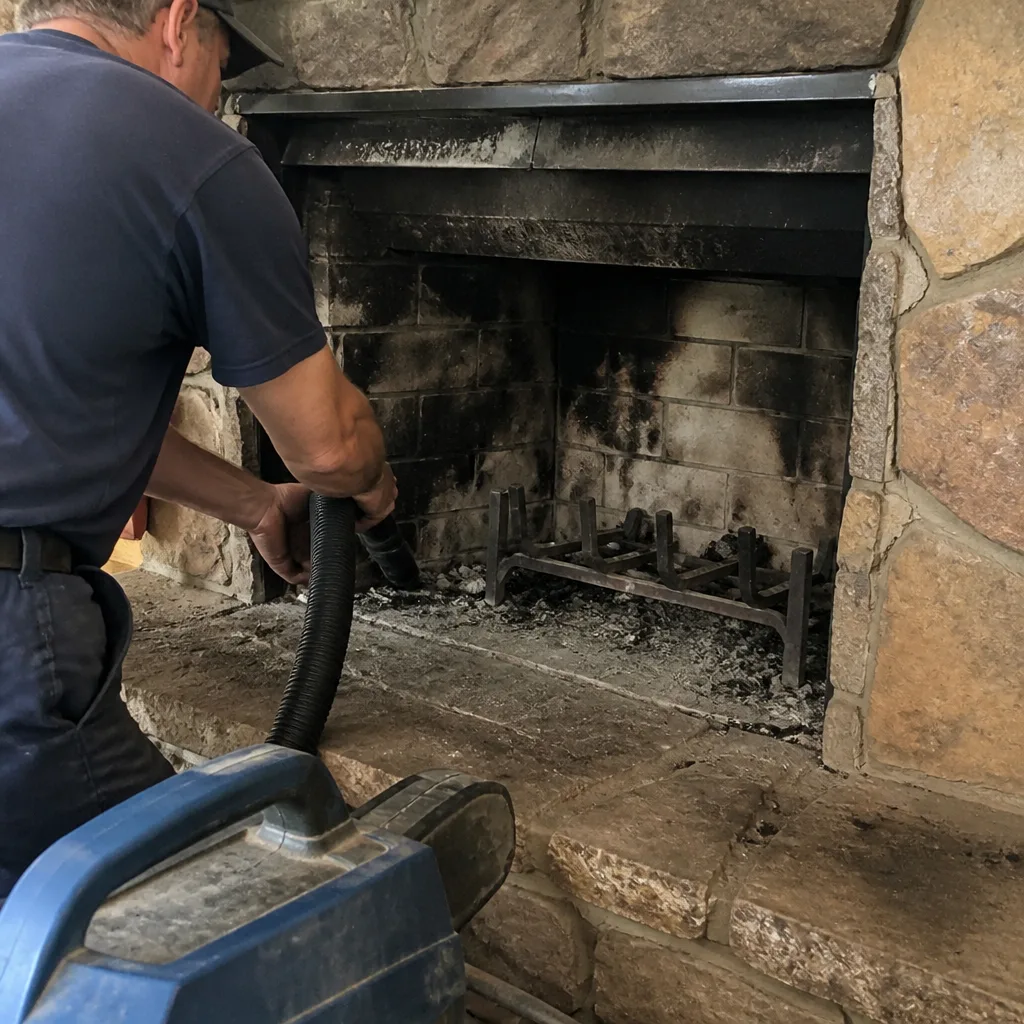 Before
 After
 Before
 After
When to Call a Professional
Call a professional when you can’t see what you’re cleaning. That covers more situations than most homeowners expect: a first-time inspection after years of DIY, any chimney with glazed or hard creosote, visible cracks in the firebox or smoke chamber, a fire that draws differently or smokes into the room, evidence of birds or wildlife in the flue, a damaged or missing cap, or a home with a gas insert or a masonry flue you’ve never had inspected. If your chimney needs structural work, a sweep that finds it can address it in the same visit using professional-grade products. Chimney Sweep Lehigh Acres offers free estimates in Lehigh Acres – call (855) 473-9633. We answer 24/7. Fast dispatch from 7am to 7pm, Sunday through Friday.
Frequently Asked Questions
Yes, you can physically clean the accessible straight section of your flue with a rod-and-brush kit, and for a light annual cleaning on a simple chimney that’s a real option. What you can’t do is inspect the liner, smoke chamber, cap, or firebox joints without a camera and the training to read what it shows. The cleaning is doable; the safety assessment is not. Call (855) 473-9633 for a professional inspection with free estimates.
A wood-burning chimney generally needs sweeping once a year or after roughly a cord of wood, whichever comes first, and a gas fireplace should be inspected annually. In Lehigh Acres, where fireplaces sit idle through a long warm season and then get heavy use, an inspection before the first fire of the year catches problems while there’s time to fix them. Call (855) 473-9633 to book a sweep and inspection.
Nothing visible, which is the problem – a cracked liner or glazed creosote doesn’t announce itself until there’s a fire. Skipping inspection means years can pass without anyone confirming the flue is intact, and the first sign of trouble can be a chimney fire or smoke where it shouldn’t be. A camera inspection is how you find out before that happens. Call (855) 473-9633 for a free estimate.
It can leave the hazards it can’t reach: Stage 3 glazed creosote above the brush’s contact line, liner cracks, cap damage, and firebox joint gaps. The cleaning removes the visible soot and creates the impression the chimney is fine, while the actual hazards sit untouched. That’s the false sense of safety a professional inspection exists to correct. Call (855) 473-9633 to get the flue on camera.
Yes. Stage 3 glazed creosote is hard, shiny, and baked onto the flue wall, and a standard brush glides right over it because it looks like a clean dark surface. It’s concentrated fuel, and it takes a rotary cleaning system to remove it properly. If your flue has a shiny, tar-like coating anywhere, book a professional sweep. Call (855) 473-9633 for a free estimate.
A chimney that looks clean can still fail an inspection, which is exactly why “looks clean” isn’t a safety check. The hazards that matter – liner integrity, smoke chamber creosote, cap condition, firebox joints – are invisible from the firebox floor. A professional sweep with a camera shows you what’s actually there. Call (855) 473-9633 to schedule an inspection in Lehigh Acres.
The Bottom Line
DIY chimney cleaning is genuinely possible, and we won’t pretend otherwise. But the question isn’t whether you can brush your flue – it’s whether brushing tells you your chimney is safe, and it doesn’t. A brush cleans the walls it can reach and leaves the liner, smoke chamber, cap, and firebox joints unassessed. In Lehigh Acres, long idle seasons and wildlife in open flues add risks a homeowner kit isn’t built to handle. If you’re going to do one thing after reading this, book a professional inspection and watch the camera footage. Then you’ll know, instead of assuming. Cleaning, repair, and dryer vent service, handled with materials from brands we name and stand behind – that’s the whole job.
Ready to find out what’s actually in your flue? Call (855) 473-9633 for a free estimate from Chimney Sweep Lehigh Acres. We answer 24/7. Fast dispatch from 7am to 7pm, Sunday through Friday. Our technicians have up to 8 years of experience, and nothing gets recommended without camera evidence you can see for yourself.
Written by the team at Chimney Sweep Lehigh Acres.